Op-Ed & Columns
-

PokemonGo introduces us to augmented reality
The article below was featured on the opinion page of The Greenville News on Friday, July 22, 2016. This link will take you to the article on greenvilleonline.com Jasmine Smith and her husband, Ryan, were in pursuit of a bright orange Tauros Bull under the Liberty Bridge in Falls Park when I met them…
-
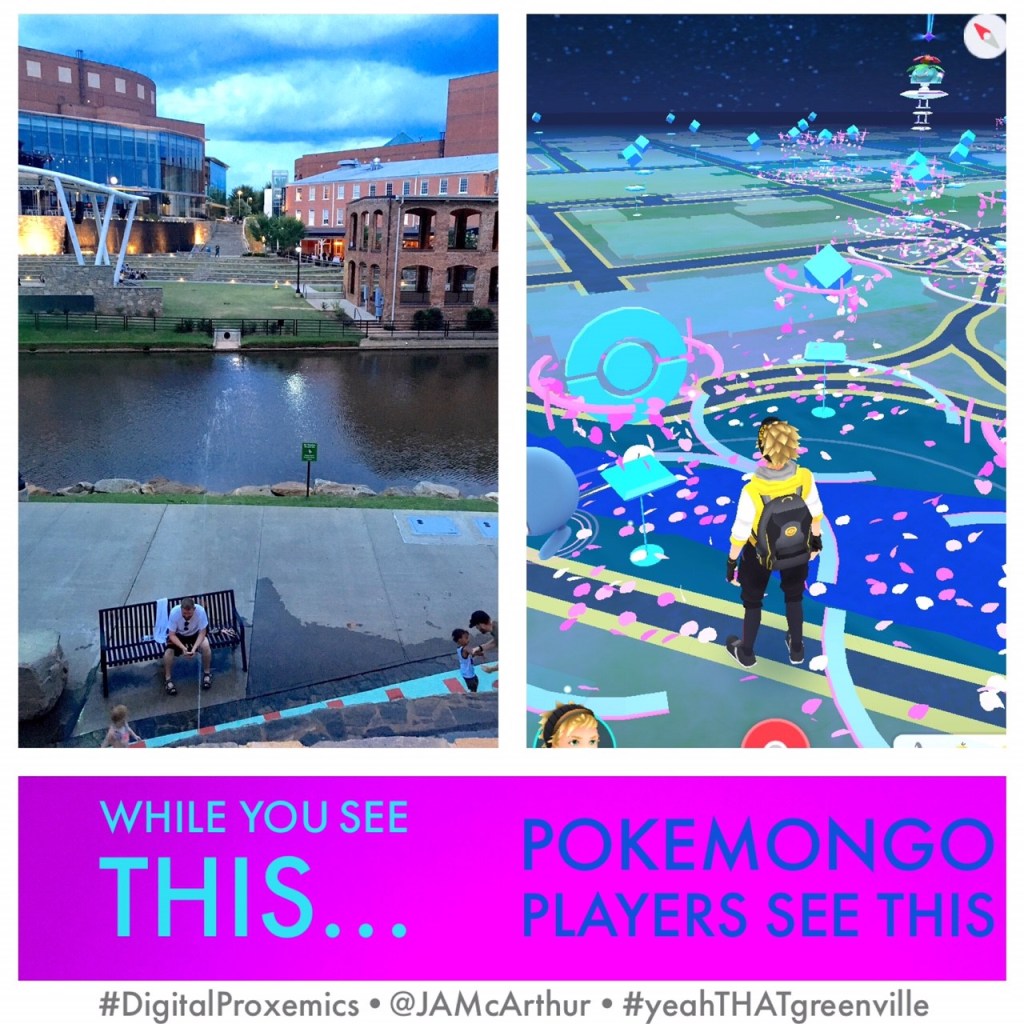
PokemonGo has a beautiful side
This article was published in the Charlotte Observer on Sunday, July 18, 2016 on the opinion/editorial page. The link below will take you to the op-ed on the Observer’s website. A wild zubat invaded my house the other morning, flapping and fluttering its wings and causing quite a stir. I quickly tried to capture it using…
-

Museums Extend the Conversation
The following column was featured in The Greenville News on Monday, January 27, 2014. See it on GreenvilleOnline here. In a world where digital technology stores all of our information, the role of the museum as an archive of curation and reflection seems more important than ever. Fifty years after the tumultuous 1960s, the Upcountry…
-

Unusual Commencement Speech offers $100,000 through Flash Philanthropy
The following column was featured on the national blog of the Social Media Club on May 4, 2013 University professors hear a lot of commencement speeches. But one I heard this weekend was unlike any other I’ve ever experienced. By combining the power of digital media, passion for philanthropy, and mobile technology,graduating students at Queens…
-

Staying Current in Social Media Education
The following article was featured on the Social Media Club’s national Social Media Education blog on February 19, 2013: As a professor who studies digital media, many people often ask me how I stay current in the field. Studying social media and digital media can be a tricky business in that new things are always being…
-

The Election has Facebook seeing Red – and Blue
The following article was featured on the Social Media Club’s national Social Media Education blog on Election Day, November 6, 2012: If you’re like me, your friends on Facebook have been talking about the election. I’m friends with supporters of President Obama and Governor Romney, and even a few who are advocating for Governor Johnson.…
-

Experimenting with Pinterest in the college classroom
The article below was featured on the Social Media Club’s Education Blog on September 17, 2012. I embarked on another classroom teaching and learning experiment this fall on Pinterest. One hundred of our students at Queens University of Charlotte were dispatched into the venues and streets of Charlotte as student interns and volunteers during the 2012 Democratic…
-
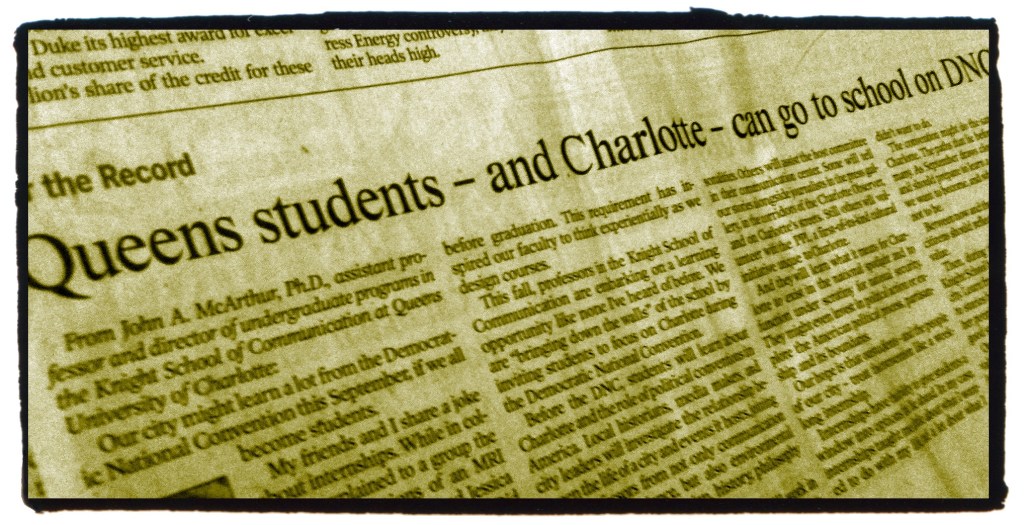
Queens students – and Charlotte – can go to school on DNC
Queens students – and Charlotte – can go to school on DNC This column ran in the Charlotte Observer on September 30, 2011 on the opinion/editorial page. The link above will take you to the column on the Observer’s website. Our city might learn a lot from the Democratic National Convention this September, if we…
-
Investing in Digital Literacy through Social Media
This article was featured on the Social Media Club’s Education Blog on Wednesday, May 9, 2012. *** Entertainer Cee-Lo Green’s cat, Purrfect, has become a mouthpiece for NBC’s The Voice, a singing competion which this past Tuesday crowned its second winner. With 63,000 followers on Twitter, this feline certainly has a voice of its own – one that…
-
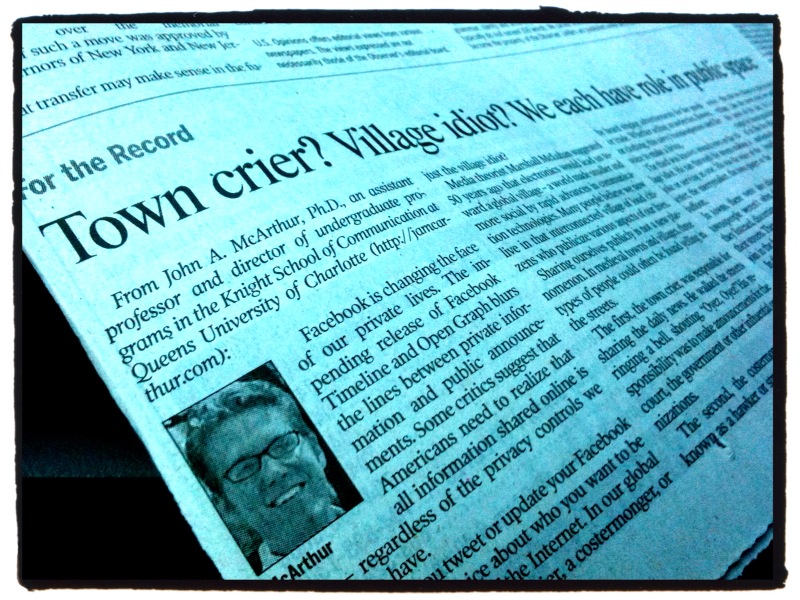
Town Crier? Village Idiot? We each have role in public space
Town crier? Village idiot? We each have role in public space CharlotteObserver.com & The Charlotte Observer Newspaper This column ran in the Charlotte Observer on September 30, 2011 on the opinion/editorial page. The link above will take you to the column on the Observer’s website. Facebook is changing the face of our private lives. The impending release…
 J.A.McArthur