Home » Publications & Media Appearances » Speaking Engagements
Category Archives: Speaking Engagements
Universidad Interamericana de Puerto Rico
Thank you to the faculty members at the Universidad Interamericana de Puerto Rico for being excellent hosts. This week, I facilitated two faculty development workshops at the university. The workshops focused on (1) integrating technology into the classroom and (2) digital and media literacy.
The slides and resources for workshop participants are below:
Resources mentioned during the session:
- Putting Pinterest to the Test
- Sample student projects in digital and media literacy:
- Building a Class Twitterfall
- Community 2.0

Digital Cities: Urban community development through information design
I was privileged to present a paper – “Digital Cities: Urban community development through information design” – at the annual conference of the National Communication Association in Orlando, Florida.
The paper is an extension of my work on space, technology, and user-experience. The theoretical argument sits at the intersection of information design, city planning, and placemaking. The presentation slides and examples of case studies are included below:
DNC Insights 20 seconds at a time
The following article was featured by Queens University of Charlotte on Sept. 5, 2012:
In precisely 40 minutes and 120 slides, five Queens’ faculty members and an alumnus regaled students with six presentations tied to the Democratic National Convention. The topics ranged from the history of political protests to the increasing role of influence that graphic designers play in politics.
The presenters used a unique methodology known as Pecha Kucha, Japanese for chit-chat, in which 20 slides are shown for 20 seconds each, resulting in six minutes and 40 seconds total per speaker. Because the slides were pre-timed, the presenters had to carefully craft their respective remarks to maintain the concise, fast-paced nature of the presentation format.
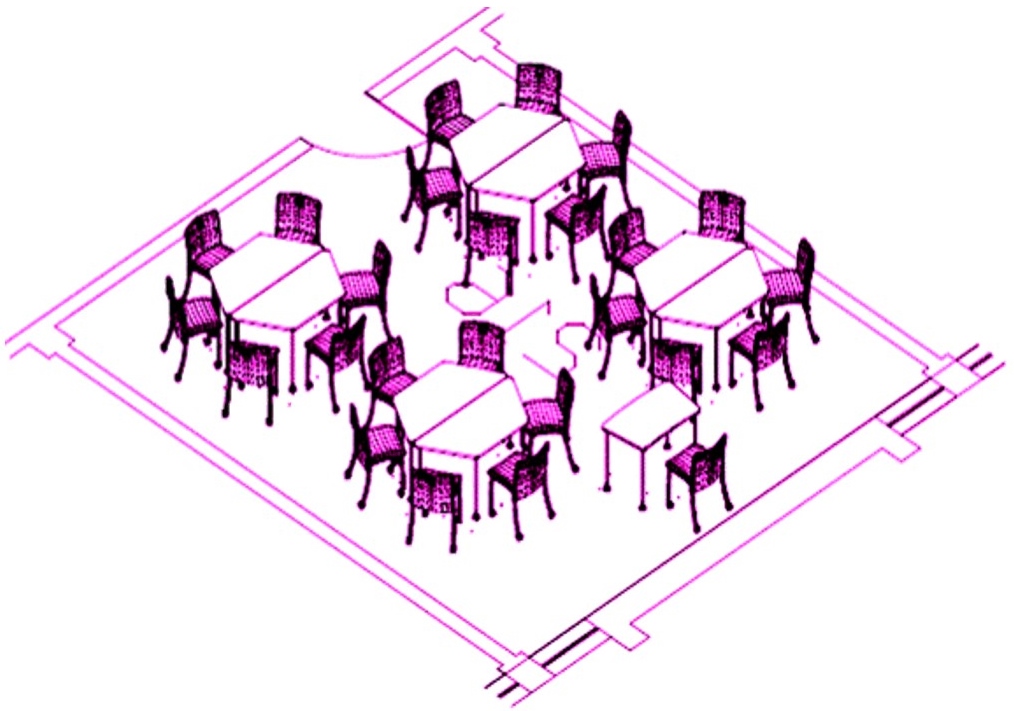
Mike Wirth, assistant professor of new media design, presented shifts in branding political candidates; Dr. Erin DeBell, Spanish instructor, spoke on the numbers of Hispanic voters; Dr. John McArthur, assistant professor of communication, discussed convention space planning; Queens alumnus Jim Shoff talked about third places; Dr. Jessica Braswell, assistant professor of environmental science, spoke about the convention’s effect on the environment; and, Dr. Jennifer Bratyanski, history lecturer, provided a look at the history of protest at political conventions.
During the presentations, students gleaned specific knowledge related to the DNC in Charlotte, from how to participate in historic events scheduled in the center of the city to the environmental impact visitors will bring during their stay.
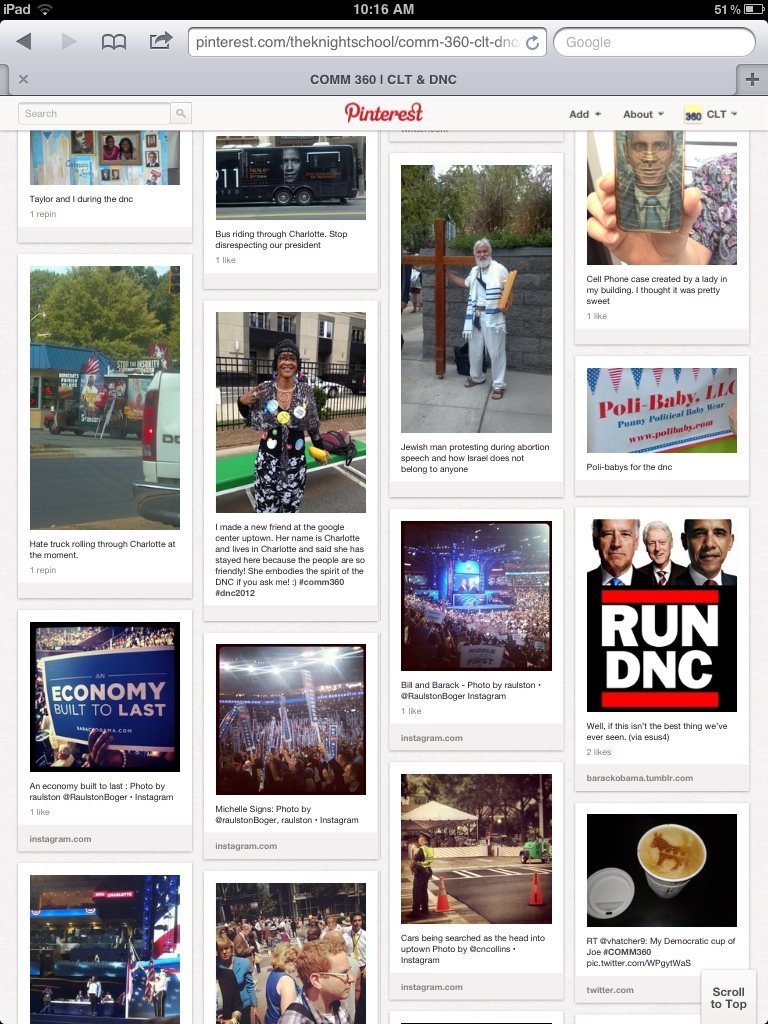
The Pecha Kucha presentations were part of a two-day course offered by The Knight School of Communication titled COMM 360: Charlotte & the Convention. More than 100 students enrolled in the innovative class, designed for students to focus on Charlotte and take advantage of our week in the national spotlight as a valuable internship.
Opening Remarks for #COMM360

Welcome to COMM 360: Charlotte and the Convention!
On behalf of my colleagues in the Knight School of Communication at Queens University of Charlotte, I am pleased to welcome you to an innovative learning opportunity like none we’ve tried before at Queens.
Next week, Charlotte will play host to a nation as the Democratic National Convention comes to our city. Following the oratories, hurricanes, and grand old celebration of the Republican Party this week in Tampa, the nation’s news stations, media personalities, and cameras are arriving in Charlotte as we speak.
The media spectacle of political conventions might only be watched live by 20-30 million viewers across our nation, but every national and local news station in America, and many others around the world, will feature at least a few minutes of coverage, suggesting that everyone in America will be able to see something about the convention in their living rooms or on their mobile phones.
And all will reference Charlotte, North Carolina.
So whether you are a flaming liberal or a social conservative, a passionate moderate or a Tea-Partier, a Whig, Democrat, Libertarian, or Republican – whether you identify as red, blue, purple, green, or exist in the various shades of gray in between – for the next week, this city and this convention will exist together.
This city and this convention will be reported on together. The people who come to attend this convention, to report on it, and to protest it, and those who watch it through media eyes, will all be coming to this city. And Charlotte will share in the spotlight of a sitting President facing a competitive re-election in just two short months.
This learning experience is not about who you vote for. It won’t be about Democrats or Republicans. And it will neither sing the praises nor cast suspicions on Barack Obama or Mitt Romney. Instead, it will focus on a city, a convention, politics, and the role that major, national events play in the life of an American city.
The Charlotte metropolitan area has 1,750,000 residents, 751,000 of whom live in the city limits. This makes Charlotte the 17th largest city in America by population, and places it in the top 25 media markets in our country. And it is growing.
Over the next two days, you’ll think and learn about Charlotte, communication, politics, social justice, social media, protests, conventions, history, technology, and citizenship.
Today and tomorrow, we have speakers including the premier Charlotte historian Tom Hanchett; social media and journalism innovator Jason Silverstein; leaders of the Democratic National Convention Host Committee; and engaged Charlotte citizens (in addition to some of Queens University’s most engaging and beloved faculty and staff), all of whom are listed in your program.
Then, you’ll go out into the city. Four of you have placements at ABC News. Another dozen are working with the Charlotte Observer. Thirty of you will be on the ground with the convention’s host committee in their press gallery. Some of you earned prestigious placements on the podium committee, with the foreign press gallery, or as convention hosts for dignitaries from the White House.Thirty more of you are placed in the heart of Charlotte with the PPL, home to a cultural, arts, and media experiment yet untested. Still others are working with local media and local organizations including the Ritz-Carlton, WCNC, WBTV, and QCityMetro. And, five of you are working in the production booths of the Daily Show with Jon Stewart.
One of our faculty members told me the other day that he has lived in 4 major American cities in his lifetime, and never has he been in a city while it has hosted a major political convention. For most of us, this is a once in a lifetime event, and we hope that our city, and you, treat it as such.
We cannot wait to hear about the stories, experiences and learning that emerge from this one week. You’ll be archiving your experiences on Pinterest, on our course Moodle site, and on the pages of local and national news. And we will be cheering you on.
But for now, let’s get started. Welcome to COMM 360.
For students who are taking this class for credit, here are few technical items we need to discuss before we get started.
- In your programs, you’ll see the full lineup of events for the next two days. Students receiving course credit should attend all of the sessions. If you need to miss one session to attend another class or engage in your placement, please let our volunteers at the registration table know about your time conflict so we can excuse you from that session.
- Your Nametags. Your nametags are your tickets into the event. In some sessions, we’ve invited the general public to attend and this room could be filled to capacity at some times and have plenty of seats during others. That’s why we are asking you get your nametags at registration and turn them in whenever you leave the auditorium. They’ll be waiting for you when you return, and you can just pick them up without having to sign in.
- Course requirements. You’ve received multiple emails about this course, all of which have pointed you to our course page on Moodle. There, you will find the syllabus and instructions for the 3 assignments for this course. All assignments must be completed by September 15th. If you have any questions about the syllabus or the assignments, ask at the registration table or send me an email.
- Your convention placements: If you have any questions about your convention placement, please contact Jennifer Hull who is standing right over here. She’s your go-to person for any information about your placement.
- Finally, enjoy the next two days: The beauty of a two-day lineup like this is obvious. You’ll hear from over 30 different speakers about their impressions of this event. The topics will be diverse, the styles will be many, and the session formats will change. Hopefully, you’ll enjoy all the sessions, but rest assured that if one isn’t striking your fancy, a different one will be on the way. We’ve worked in times for you to eat, converse, take breaks, and ask questions. So please do.
Whether you’re joining us in person today, over the Internet, from your placement sites, or on the floors of the convention, please continue to connect with us. We’re using the hashtag #COMM360 for this 2-day conference, and you can connect with us on Twitter and Pinterest. We also have people here who will be live blogging, tweeting, and recording these sessions to share them with others. You’re invited to simply listen, to take notes, to critically reflect, to ask questions, to tweet, to blog, and to share these sessions on Facebook and Pinterest. We hope that you will.
I’d like to begin our two-days with a thank you to all of the speakers who have graciously volunteered their time and expertise for this opportunity and a special thank you to Jennifer Hull who has been working tirelessly this summer to ensure that all of you have an amazing week during the convention.
Pedagogy, then Technology
Want to integrate technology into your classroom? Choose technology that supports your pedagogical aims.

That’s the message of my workshop conducted this morning at the Teaching Professor Conference in Washington, DC. Attendees worked together to create opportunities to infuse their courses with technology. I presented 4 experiments that I’ve tried in my classroom with social networks, Twitter chats, podcasting, and mobile phones. Then, we all shared ideas about ways to support pedagogy through innovative technology use.
For all the attendees and other interested folks,
here are the slides from this morning’s presentation:
_________________________________________________
Presentation links and resources mentioned in the session:
“Design Thinking” at ACBJ’s Digital Speaker Series
Our Community 2.0 project is starting to generate some attention, and I was honored to be invited to share my work in the Digital Speaker Series hosted by American City Business Journals in Charlotte, North Carolina, last week. Here is the slide deck from the presentation, which focused on applying design thinking to the issues of our professional work:
Thanks to Jason Silverstein and the people at ACBJ for inviting me to speak.
Honoring Van King
On May 4, I had the pleasure of honoring Van King, Founding Dean of the James L. Knight School of Communication at Queens University of Charlotte, who will be retiring next month. Below is a copy of my remarks, delivered at the university’s Board of Trustees Meeting.
***
You should always be reflecting on your learning.
This is Van King’s perennial refrain shared with me throughout his four years at Queens University of Charlotte. What have you learned?
When Van first arrived at Queens, this seasoned newspaper man spent time learning the world of academia. If asked, he might recount a story from his first month at Queens when he saw a longtime professor sitting on a bench in the academic quad. Approaching his new colleague, Van called out, “What are you doing?” Norris Frederick looked up and replied, “Reading a book.”
In an environment full of teachers and thinkers, Van, the fast-paced newspaper publisher and media innovator, knew he had found an exciting place to live and work, and a new type of challenge – a challenge that, I imagine, could have been at once desperately frustrating and wildly enthralling.
After a meeting earlier this week, I asked Van why he shared a particular story he told during a staff meeting. He simply said, “When I was talking, I was teaching.”
You see, in a university full of teachers, Van fits.
So, Van, I borrowed your question and I polled the people who work closely with you everyday, and I asked them to share with me an answer to the seemingly simple question: What have you learned from Van King? Here are their responses in their own words:
“Van taught me that an open, supportive, and collaborative culture – could also be rigorous, challenging, and incredibly productive. Before I came here, I thought those two things were mutually exclusive but he (and my colleagues in the Knight School) have taught me that they can (and do) co-exist …The Knight School has been – and is – on a journey. As our leader, Van has set the tone and led the charge. I’ve only been here for a year – and in that year, I learned one thing: I’d follow him anywhere.”
Another colleague says:
“I learned a lot about myself. His feedback was not always something that was easy to hear but upon reflection, it was quite helpful. I [came to appreciate] his honesty in what he thought were my strengths and weaknesses. His advice will be invaluable as I continue with my career.”
A third colleague writes,
“I have learned that it’s okay and important to bring your whole self to work–that’s it’s ok and important to talk about family and the joys and challenges we’re all experiencing at work and at home.”
A fourth shares,
“What I’ve learned from Van? People matter… He cares for the whole person. I’ll never forget my first evaluation. I had not yet even completed a full year at Queens so we met just to talk about my experiences thus far and plan for the next year. At one point, unsolicited, he asked me … “Have you ever read Martin Luther King Jr.’s Letter from a Birmingham Jail? I told him I had but it had been several years. That question sparked a conversation about values, and perspective, and remembering what is important in life. His only “requirement” for me that day was to re-read Letter from a Birmingham Jail. I will fondly remember that moment because it goes to the core of who Van is: An excellent leader. A visionary leader. A leader who cares about people, their character, and their values. Needless to say, I had done my homework the next year when I sat down with Van for my evaluation. I had re-read the Letter. And I think I will every year, whomever is on the other side of the desk.”
As for me, I’ve learned more than a few lessons about the intersection of visionary leadership and personal integrity. In my role in the Knight School, I’ve had the pleasure of collaborating closely with Van. My sometimes “behind the scenes” knowledge of Van confirms for me that, in every circumstance, a true leader acts with integrity. I’ve noticed that considers each person, he recognizes the value that each person brings to the conversation, and he affirms that value, even in times of disagreement. I have watched him change an opinion when a stronger argument is shared, and hold firmly to a decision for which he possess an unwavering conviction.
I’ve learned the value in finding the big things to do and also the value in deciding what not to do.
And watching Van interact with his wife, children, and grandchildren has reinforced for me the value of successfully balancing family, faith, talent, and vocation.
Van’s record of success at Queens is undeniable, from the establishment of a school of communication and an organizational culture to the realization of a relationship with Knight Foundation that brought honor to Queens and to the family of James L. Knight, for whom our school is named.
But here in the Knight School, Van King has been a teacher of teachers, who unabashedly reminds us all to consider what we are learning.
Van, on behalf of all my colleagues in the James L. Knight School of Communication and our friends around the university, I thank you for your service to Queens and for being a man of integrity who challenges us all to remember, everyday, what we are learning.
Adding Image Headers in Moodle
Navigating courses in online platforms can raise all sorts of issues for students and their instructors. At Queens University of Charlotte, we use Moodle to create opportunities for course management online.
As I’ve been seeking to understand the way that students navigate through this digital space, I began to realize that signposts were as important for online classrooms as they are for shopping malls, event venues, or roadways.
To create signposts in Moodle, I first asked myself how I want students to move through the course. In the case of my Introduction to Communication course, taught online last summer, I wanted them to move through it in a chronological format [In other courses, the format has been topically based or situated around course deliverables in production-based courses].
So, I added visual signposts as headers in all my courses on Moodle. These orient the students (and me) to the flow of the course and its assignments.
I presented my strategies for this practice at a Center for Excellence in Teaching and Learning workshop at Queens in February. It has been recreated in video form here:
CETL – Adding Images To Moodle from Queens University of Charlotte on Vimeo.
Jada Williams in the university’s instructional design department also wrote the steps into a blog post in her “Moodle Tips” series.
Does Technology Impact our Health?
Bobby DeMuro, who has been hosting The Bobby DeMuro Show on WBT Radio every Sunday evening since fall 2011, tackles current issues related to public health. This week’s topic: Does technology impact our health?
Bobby hosted me on tonight’s show alongside Jason Silverstein, Jon West, and others to discuss current issues in media, technology, and society. My section of the show covered the ways that technology intersects with communication, advocacy, and health.
I answered questions from DeMuro surrounding the impact of technology on health, the relationship between technology and society, our “need” to be connected, the growing digital divide, and future predictions about society’s reliance on technology.
My message was one of the continued need for digital literacy. We each have a responsibility to use technology wisely, by carefully assessing the information we discover and creating information that is accurate and reliable. We each need to take responsibility for the information we share, and we have to learn how to collaborate with our communities through technology as well as in person.
Listen to or download the full interview on media fire
Thanks to Bobby DeMuro for bringing this topic to the Charlotte airwaves and for inviting me to be a participant.
For more information about the Bobby DeMuro Show, visit http://bobbydemuro.com/work/wbt/
Voicing a Campus Icon
Where do information design theory, digital media, and community engagment intersect? One location is on the Queens University of Charlotte campus inside a fountain in the middle of a major courtyard. That’s the home of @QueensDiana.
At the National Communication Association annual conference in New Orleans, Louisiana, I presented a paper on the hyperlocal community engagement enhanced by @QueensDiana, the Twitter page of the bronze statue Diana, Goddess of the Hunt.
My presentation surrounded the intersection between the user-experience of Diana and the sense of community created in that experience. Here are the visuals that accompanied my presentation.
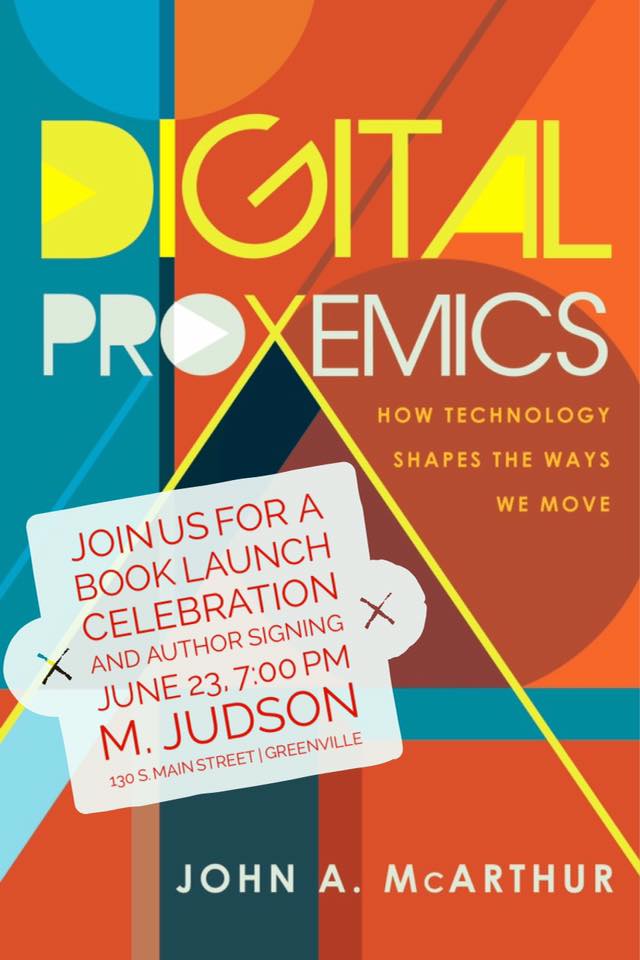
If you’re interested in this topic and other case studies about the intersection of digital media and information design, look forward to our book on the topic coming out this spring.