JAMcArthur
-

Running (not-so) Alone
I like to run 5Ks. The distance provides me with an appropriate level of challenge and reward. I enjoy running among groups of thousands who gather to promote active lifestyles. And yet, even among a crowd of thousands, I can still feel like I am running alone. Onlookers often suggest to me that social and…
-

Offices Don’t Need Walls
On my commute this morning, I noticed the most curious of offices. Naturally, I photographed and tweeted my haphazard discovery: Offices. Increasingly mobile and no longer constrained by walls: http://twitpic.com/3r6q86 — John A. McArthur (@JAMcArthur) January 18, 2011 The result of my single, innocent tweet has been a backlash of comments about the cultural and sociological…
-

Teaching Attribution Theory
Dr. John A. McArthur, Assistant Professor in the Knight School of Communication, had an article published in the January 2011 issue of Communication Teacher. The article, “What Happened? Teaching Attribution Theory through ambiguous prompts,” describes an interactive teaching activity to assist with instruction of the attribution theory in communication and other social science courses. The article includes…
-

No names, just rants and raves
The Charlotte Observer’s social media columnist Eric Frazier wrote a feature on Charlotte-based startup Fastnote.com, published on December 28, 2010. Below are excerpts from the article: Richard Shaffner hardly fits the hip young social media CEO stereotype. He’s a 55-year-old father of six, a former banker who’s still finding his way around the new world…
-

Engage! (Solis, 2010)
Engage!: The complete guide for brands and business to build, cultivate, and measure success on the new web (Solis, 2010) I assigned several books for a graduate seminar in Digital Strategic Communication, taught at Queens University of Charlotte in the Knight School of Communication’s master’s program. The favorite, by far, was Brian Solis’ Engage! In…
-
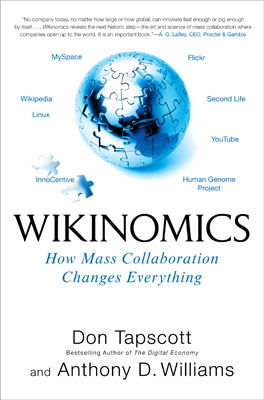
Wikinomics (Tapscott & Williams, 2006)
Wikinomics: How mass collaboration changes everything (Tapscott & Williams, 2006) Premised around four major ideas of a new economy – (1) Openness; (2) Peering; (3) Sharing; and, (4) Acting Globally – Wikinomics: How mass collaboration changes everything suggests that mass communication turns the traditional inward business model toward an outward focus. The authors point to…
-
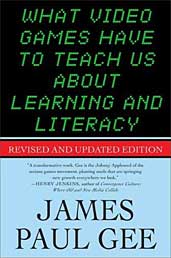
What Video Games Have to Teach Us about Learning and Literacy (Gee, 2007)
What Video Games Have to Teach Us about Learning and Literacy (Gee, 2007) James Paul Gee’s What Video Games Have to Teach Us about Learning and Literacy is less about video games and more about a theoretical approach to education, says Kristen Odell. The concept behind the book is a discussion about learning, arguing that…
-

Blog Rules (Flynn, 2006)
Blog Rules: A business guide to managing policy, public relations, and legal issues (Flynn, 2006) The discussion surrounding Blog Rules: A business guide to managing policy, public relations, and legal issues by Nancy Flynn highlighted using business blogs as an internal tool for top-down communication. Flynn suggests that companies treat blogs as archives, ensure corporate policies…
-

Naked Conversations (Scoble & Israel, 2006)
Naked Conversations: How blogs are changing the way businesses talk with customers (Scoble & Israel, 2006) “We wished we read this at the beginning of this class,” say Amy Martin and Shannon Hames about Naked Conversations: How blogs are changing the way businesses talk with customers. But, says Martin, there remains a big split between people…
-

Social Media & Education: School, Teacher, Student & Classroom
The leaders of Social Media Charlotte invited me to speak at the December 2010 breakfast meeting titled, “Social Media & Education: School, Teacher, Student & Classroom.” The panel – which included Dr. Jeri Langford (Associate Professor at Johnson & Wales University), Adam Brooks (Communications Director for Central Piedmont Community College), and Brian Baute (IT Director…
 J.A.McArthur