
When we write papers or speak publicly, we usually understand how to give credit to others. However, sensibilities about plagiarism and intellectual property often disappear when writing online. But, citing sources can be easier and more productive in online media than it would be in any other form. Here are five strategies for citing sources accurately and effectively online:
To give credit for thoughts and ideas:
- Be “Linky”
Hyperlinks are excellent because they connect the reader to the original source of the information and they create connections that can improve your readership. For example, the term linky comes from a helpful book by Scoble and Israel. Note two things about this link example: (1) on mouseover, the title tells the reader where the link will go; and (2) the author gets a mention in the link.
To direct readers to further content:
- Use a Boilerplate
Boilerplates can be effectively used to direct readers to further reading or related content. See an example here for using a boilerplate to link back to an original source. Note that the boilerplate in the short article contains embedded links to Communication Teacher.
To use direct quotes:
- Use a blockquote with link
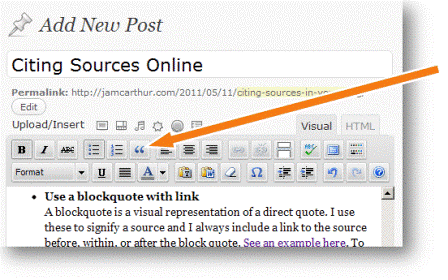
A blockquote is a visual representation of a direct quote. Use these to signify a source and always include a link to the source before, within, or after the block quote. See an example here. To use a block quote in WordPress, look for this icon:
To use copies of images or media created by someone else:
- Embed the image or media so it links back to its source.
When using an image or video that you did not take with your own camera or create on your computer, cite the source. The easiest way to do this is to embed the image or video. This is different than copying an image and uploading it. WordPress has built-in embedding capabilities for all web-based images, as well as videos found on youtube, vimeo, google and dailymotion. Here’s a primer on how to ensure appropriate citations through embedding with links:
When in doubt, revert to what you know:
- Use quotation marks followed by a citation.
You can always use your style of choice (APA, MLA, Chicago, Harvard) to cite sources in the same manner you would in a paper. Be sure to include a list of references if you go this route.


 J.A.McArthur
Leave a reply to Corrine Weisgerber Cancel reply