Article Topics
My thoughts and the thoughts of talented others on digital strategic communication, digital & media literacy, information design, education & instruction, and the field of human communication.
-

Royals Radio, Season One
This semester, students at Queens University of Charlotte embarked on an exploratory learning experience in episodic, podcast-based radio. The resulting “Royals Radio” is a product of Queens University of Charlotte, and Dr. John A. McArthur and was produced by students and faculty in an interdisciplinary studies class at the university. Each episode has a different producer and topic,…
-

Recapping AAC&U’s 2013 General Education Conference
“What colleges have been doing isn’t wrong or irresponsible. But, it is insufficient.” These opening sentiments from Dr. Terrel Rhodes, AAC&U’s Vice President set the stage for considering the change facing higher education at the 2013 conference on general education. The meeting’s setting along Boston’s Freedom Trail was a telling metaphor for for a conference…
-

Staying Current in Social Media Education
The following article was featured on the Social Media Club’s national Social Media Education blog on February 19, 2013: As a professor who studies digital media, many people often ask me how I stay current in the field. Studying social media and digital media can be a tricky business in that new things are always being…
-

Universidad Interamericana de Puerto Rico
Thank you to the faculty members at the Universidad Interamericana de Puerto Rico for being excellent hosts. This week, I facilitated two faculty development workshops at the university. The workshops focused on (1) integrating technology into the classroom and (2) digital and media literacy. The slides and resources for workshop participants are below: Resources mentioned…
-
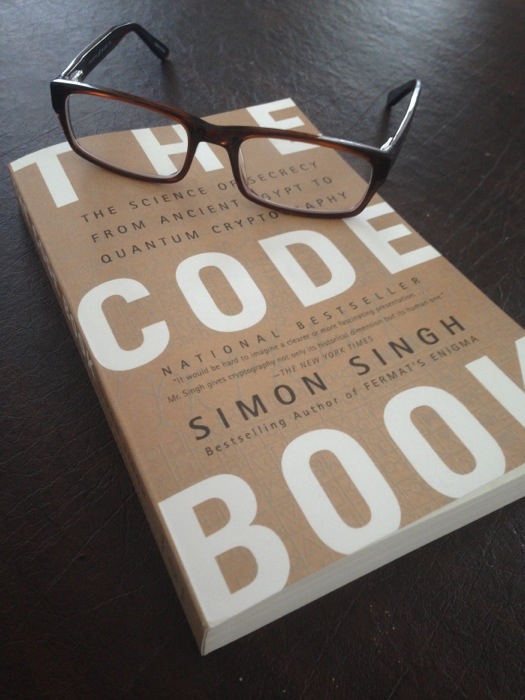
Codebreaking, Secrecy and Other Classroom Problems
Puzzled? My students are. At least in name. This semester at Queens University of Charlotte, I have the pleasure of designing and facilitating an “exploration seminar” in the art of puzzling. The “Puzzled” course gives students the opportunity to learn and think about a variety of problem solving strategies, not the least of which is…
-
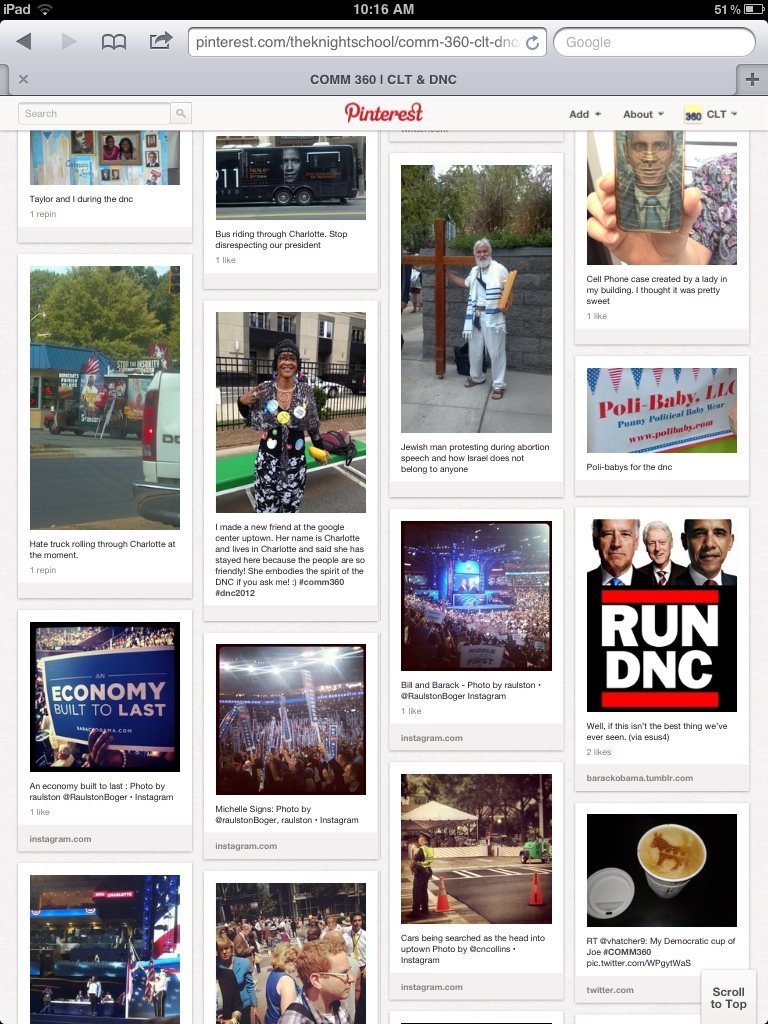
Putting Pinterest to the Test
Queens University of Charlotte and Dr. John A. McArthur were featured on CampusTechnology.com in a story about experimenting with Pinterest in the college classroom. The article highlights the COMM 360: Charlotte and the Convention course and its use of Pinterest as an archive tool. Below are two excerpts from the article, which can be read…
-

You are what you tweet
“We did this to make people realize that what they tweet is public information and can be seen by anyone.” First-year students Nick Simonetti and Jeremy Swick created a project called You Are What You Tweet for their freshman seminar course in digital literacy at Queens University of Charlotte. The premise was simple: ask students to wear one of…
-

Digital Cities: Urban community development through information design
I was privileged to present a paper – “Digital Cities: Urban community development through information design” – at the annual conference of the National Communication Association in Orlando, Florida. The paper is an extension of my work on space, technology, and user-experience. The theoretical argument sits at the intersection of information design, city planning, and…
-

Nonverbal Communication and Disney Animation at #NCA12
To kick off the panel, Darlene Hadrika presented a beautiful animated short film created by students at the University of Central Florida that showcases nonverbal communication in eye contact, body posture, and music. Lon Smart, a head character artist at Walt Disney Parks, showcased some of his work (which includes the Lion King’s hyenas and…
-

Intersections in Nonverbal and Health Communication at #NCA12
At the 2012 National Communication Association annual convention, researchers from around the country shared their work in a panel titled “Intersections in Nonverbal and Health Communication.” I was drawn to the panel because most of the papers incorporated some kind of communication technology either in the research design or the methodology. Here’s a quick recap of the…
 J.A.McArthur