Educator’s Toolbox
Posts about instructional communication and the assessment of student learning and teacher behaviors.
-

Harness the Power of Learning Spaces
Classroom space should work for us, not against us. As the evolution of classroom space continues, many professors find themselves working in innovative environments like studios, computer labs, and modifiable classrooms. To effectively facilitate learning in such spaces, teachers must harness the power of the space instead of being paralyzed by it. At Queens University…
-

Rate My Professor
The end of the term is upon us. And, once again, the time for course evaluations has come. The sum total of my experience with course evaluations leads me to believe that many mis-perceptions exist surrounding the infamous end-of-term ratings. Here are some of the most frequent, from students and professors alike: MYTH ONE: “No…
-

Academically Adrift (Arum & Roksa, 2011)
Academically Adrift: Limited learning on college campuses (by Richard Arum and Josipa Roksa, 2011) Almost half of students in college may not learn anything in their first two years, say authors Arum and Roksa. In a discussion at Queens University of Charlotte’s Center for Excellence in Teaching and Learning (CETL), faculty members from around the…
-

Building a Class Twitterfall
Mobile phones keep surfacing in the classroom. As students multitask (or just get bored) they often turn to the closest iPhone for a brief moment of respite. Instead of discouraging phone use, I wonder if it could be harnessed. Twitterfall served as my most recent attempt to do just that. In my integrated strategic communication…
-
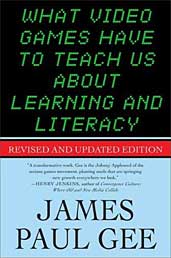
What Video Games Have to Teach Us about Learning and Literacy (Gee, 2007)
What Video Games Have to Teach Us about Learning and Literacy (Gee, 2007) James Paul Gee’s What Video Games Have to Teach Us about Learning and Literacy is less about video games and more about a theoretical approach to education, says Kristen Odell. The concept behind the book is a discussion about learning, arguing that…
-
Moving from Chalk to YouTube: Teaching with Technology
Dan O’Hair, Dean of the College of Communications and Information Studies at the University of Kentucky and past-president of the National Communication Association (NCA), is a leader in the field of communication. At the NCA 2010 annual conference, Dr. O’Hair presented on his experiences with online and hybrid instruction. Online and hybrid education has many…
-
Cloud Computing at NC State: Equitable Technology for all students?
“What’s really interesting for communication scholars is the distance that we can go in a digital communication world.” In her presentation entitled “Cloud computing, virtual computing labs, and technologically facilitated communication: The promise of advanced technologies in teaching, learning, and the community,” Sarah R. Stein of North Carolina State University discussed connections between teaching, learning…
-

Teaching (and learning) with Twitter
Can Twitter impact students’ perceptions of their teachers? Even though these findings may come as no surprise to educators who already use Twitter, our study (described below) suggests that students who are active on Twitter alongside their instructors may actually perceive their instructors to be more approachable and interactive than they would otherwise. Thus, the…
-

Social Media in the Classroom
Educators and technologists often grapple with decisions about employing the latest technologies in the service of education. Some believe that the newest technology needs to be used in classrooms so that students never fall behind. Others suggest that education is not about the technology, but rather the content. My own thoughts reflect that technology can…
-

“The Little Committee that Could”
Queens University of Charlotte Media Release May 26, 2010 When you think about assessment, do you hear a solemn funeral march ringing in your ears? Perhaps your eyes roll. Maybe you think of assessment as an endless cycle of jumping through hoops. Those on the Assessment Committee at Queens University of Charlotte want to change…
 J.A.McArthur