Article Topics
My thoughts and the thoughts of talented others on digital strategic communication, digital & media literacy, information design, education & instruction, and the field of human communication.
-
Google Designs a Birthday Experience
In honor of Les Paul‘s birthday, Google has once again re-presented its iconic logo in a new form. This time, the guitar image plays on the user’s command to create an interactive experience. To commemorate the reason for the design, I tried out my guitar skills. They don’t rival Paul’s, but here’s a sample: The design…
-

Designing Nutrition
The food pyramid is ancient history. In a move toward better communication, the U.S Department of Agriculture (USDA) ousted the pyramid in favor of “My Plate.” Is this better information design? The new design certainly gives viewers the image of their dinner and a reference point for the way their plates should look. A quick…
-

Harness the Power of Learning Spaces
Classroom space should work for us, not against us. As the evolution of classroom space continues, many professors find themselves working in innovative environments like studios, computer labs, and modifiable classrooms. To effectively facilitate learning in such spaces, teachers must harness the power of the space instead of being paralyzed by it. At Queens University…
-

Writing the Media Release
Even through the fast shifts toward online media, the press release remains a staple of the strategic communication industry. However, it has taken on two similar but divergent forms: the media release and the story release. A media release (or news release, or press release) is the traditional format for announcements to the media. Conversely,…
-

Citing Sources Online
When we write papers or speak publicly, we usually understand how to give credit to others. However, sensibilities about plagiarism and intellectual property often disappear when writing online. But, citing sources can be easier and more productive in online media than it would be in any other form. Here are five strategies for citing sources…
-

Diffusion vs. Translation
…or, “Why we want to hear from the President rather than Twitter.” Due to what news anchors called “technical difficulties with the press conference,” Twitter users and the news media had a forty-minute jump on the White House in the announcement of the death of Osama bin Laden. Yet, Americans across the nation tuned into…
-
Developing a mindset of innovation
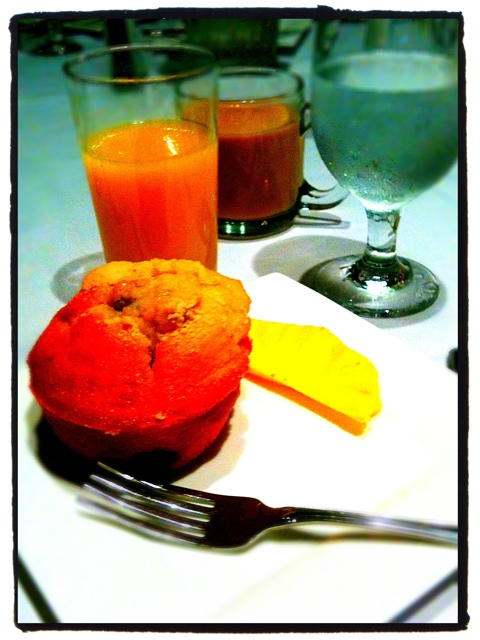
Breakfast was good at this morning’s meeting of Social Media Charlotte, but the real star was SapientNitro’s Joey Wilson. “A company’s mindset is more important than it’s organization,” says Wilson. Change in a mindset leads to a changes in the way a company might operate. Here are some current mindset changes that could lead to corporate…
-

Rate My Professor
The end of the term is upon us. And, once again, the time for course evaluations has come. The sum total of my experience with course evaluations leads me to believe that many mis-perceptions exist surrounding the infamous end-of-term ratings. Here are some of the most frequent, from students and professors alike: MYTH ONE: “No…
-
Are newspapers all washed-up?
Even though our copy of the Greenville News was drenched by a downpour this Saturday morning, my commitment to reading the paper did not wane. As I stood in my garage methodically drying wet newsprint with a discarded hair dryer, several things occurred to me: Content is king. As I dried the paper, I crumpled…
-

Popular Music meets Digital Subcultures
“Digital Subculture: A geek meaning of style” was selected as a chapter for the Sage Benchmarks in Culture and Society reference text, Popular Music. The research article — originally published in the Journal of Communication Inquiry — was an argument that subcultures could gather in digital spaces the same way that they convened in coffee houses and…
 J.A.McArthur