Life in Academe
Events and experiences that remind me that I’m a professor and I love working in higher education.
-

Social Media & Education: School, Teacher, Student & Classroom
The leaders of Social Media Charlotte invited me to speak at the December 2010 breakfast meeting titled, “Social Media & Education: School, Teacher, Student & Classroom.” The panel – which included Dr. Jeri Langford (Associate Professor at Johnson & Wales University), Adam Brooks (Communications Director for Central Piedmont Community College), and Brian Baute (IT Director…
-

Emotional Design (Norman, 2004)
Emotional Design: Why we love (or hate) everyday things (Donald Norman, 2004) Three basic processes (visceral, emotional, and reflective) guide our interactions with the everyday things in our lives. The visceral reaction is our gut reaction; the behavioral reaction is based upon our ability to use a product; and the reflective process is the cognitive…
-

Social Media Marketing Strategies (Evans, 2010)
Social Media Marketing Strategies for Engaging in Facebook. Twitter & Other Social Media (Evans, 2010) “You should be engaging in social media because it is free.” This is the first myth shredded by Liana Evans. Evans takes a strategic look at social media marketing strategies. Having a Facebook page or a blog or Twitter is not…
-

What’s Mine is Yours (Botsman & Rogers, 2010) Part II
What’s Mine is Yours: The rise of collaborative consumption by Rachel Botsman and Roo Rogers (2010) Part II Tonight, we revisited this book in a second conversation. Our previous conversation took us through the process of developing a community. Katina Watkins offered more discussion surrounding the need for corporate response once the connections have been…
-
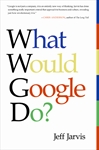
What Would Google Do? (Jarvis,2009) Part II
What Would Google Do? by Jeff Jarvis (2009) Part II Democratization of information on the Internet has implications for other businesses. Google’s model could have far reaching implications. The news might best be created by community curators who share relevant information for local audiences. The local restaurant has a similar opportunity to be “Google-y” by…
-

Reflections on NCA 2010
The annual conference of the National Communication Association is typically a whirlwind of thought-provoking formal sessions and informal discussions. This year was no exception. I began this conference with a 5.14 mile run, complete with a beautiful view of Sunday’s sunrise (at right). My run took me down Market Street to the bay, around the…
-

A Month with @Mashable
When I decided to immerse myself in Twitter in early 2009, my goal was to learn the means whereby a business might effectively tweet. I chose Pete Cashmore of Mashable (then named “Mashup”) as a guide for my learning and performed a content analysis of his 747 tweets in the month of May 2009. The…
-
Moving from Chalk to YouTube: Teaching with Technology
Dan O’Hair, Dean of the College of Communications and Information Studies at the University of Kentucky and past-president of the National Communication Association (NCA), is a leader in the field of communication. At the NCA 2010 annual conference, Dr. O’Hair presented on his experiences with online and hybrid instruction. Online and hybrid education has many…
-
Sharing, Hiding, and Finding Ourselves on Facebook
Four papers presented at the National Communication Association 2010 annual conference dealt with the issues and motivations that impact information sharing on Facebook. Exploring Privacy Management and Disclosure on Facebook Camille A. Hall, Keturi D. Beatty, Bethany Petty, and Zuoming Wang (University of North Texas) Hall et.al. discussed the effects of profile-owner’s gender and potential…
-
Digital Privacy and Digital Literacy
Knowledge of the role of Internet surveillance could play a role in our privacy behaviors online. For the typical Internet user, survelliance knowledge could include Internet tracking, marketing research, and demographic-driven advertising, among others. Yet, many typical Internet users lack basic knowledge of the surveillance practices that occur on sites they visit regularly. Some of…
 J.A.McArthur